6 Free Preschool Math Worksheets for Ages 3-5


TL;DR for Busy Parents
- Six free preschool maths worksheets covering counting 1-10, number recognition and simple addition.
- Best for ages 3-6, one page each, no prep beyond printing.
- Ten minutes is plenty. Stop while your child still wants more.
- Let them count on fingers, biscuits, anything. That is the maths.
Updated September 2026 with our most downloaded worksheets.
Your child can tell you exactly how many nuggets their sibling got versus how many they got, down to the last one. But ask them to point to the number 4 on a page and suddenly it's a mystery. That gap is completely normal, and it's exactly what preschool maths worksheets are for.
Early maths isn't about speed or getting sums right. It's about building the link between this many things and this squiggle on the page. Counting out loud, tracing numbers, matching fingers to dots, feeding a hungry cartoon character the right number of watermelon slices.
Below are six of our most downloaded maths printables for ages 3-6. Print one, grab crayons, and keep it short and cheerful.
6 free preschool maths worksheets to print today
1. Let's Count Together
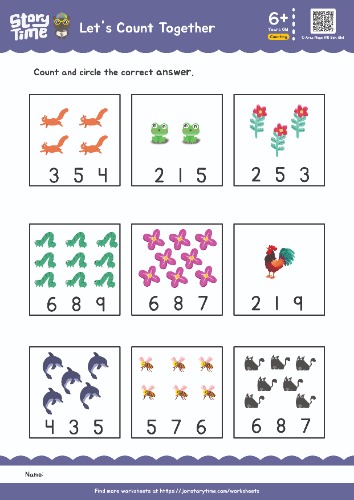
Ages 3-5 · Counting · 1 page
Children count the pictures on the page and circle the correct number. It's the cleanest starting point of the lot: count, look, choose. Parents like it because you can see straight away whether your child is counting each item once or skipping ahead.
Try this: Ask your child to touch each picture as they say the number. Pointing stops the classic "one-two-threefourfive" rush.
2. Pizza Pepperoni Counting (1-5)
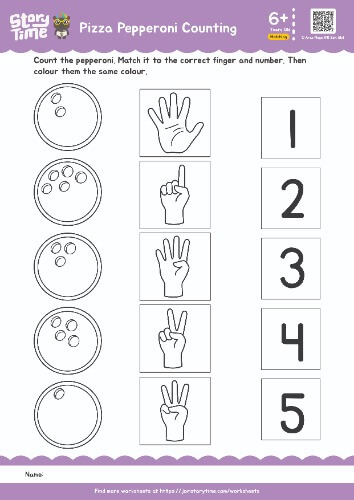
Ages 5-6 · Matching · 1 page
Count the pepperoni, match them to the right number of fingers and the right numeral, then colour the matching sets. Three ways of showing the same amount on one page, which is exactly how number sense clicks. Suits ages 5-6, but a confident four-year-old will manage with a bit of company.
Try this: Do it before actual pizza night and let them count the toppings on a real slice afterwards.
3. Number Sense (Four)
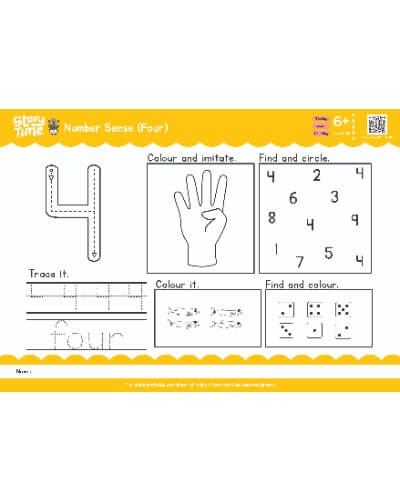
Ages 4-6 · Counting · 1 page
A hands-on page all about the number four: tracing it, colouring, counting on fingers and simple matching. Focusing on one number at a time gives slower starters room to really absorb it. Lovely for children who know the counting song but not the symbols.
Try this: Go on a "four hunt" around the house afterwards: four spoons, four socks, four steps to the door.
4. Simple Addition
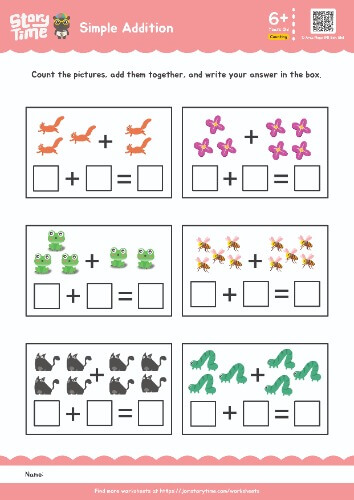
Ages 5-6 · Counting · 1 page
Children count the pictures in each group and work out the total, which is addition without any scary symbols doing the heavy lifting. It nudges number recognition along at the same time. A good next step once counting to ten feels easy.
Try this: Let them count on fingers or move little objects. Mental maths comes much later and that's fine.
5. Watermelon Seeds Counting
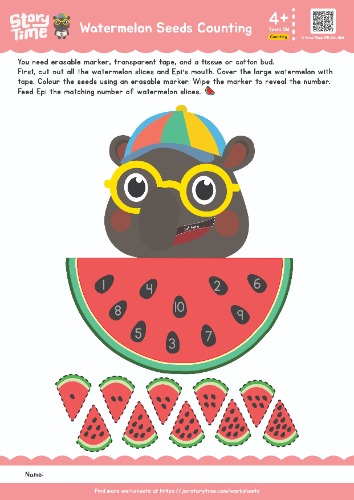
Ages 4-5 · Matching · 1 page
Count and feed! Children read the number, then give Epi the matching number of watermelon slices. The pretend-play angle keeps wriggly four-year-olds at the table a few minutes longer than usual.
Try this: Use a silly munching voice for Epi after each correct set. Yes, you will be asked to do it again.
6. Number Sense (One)
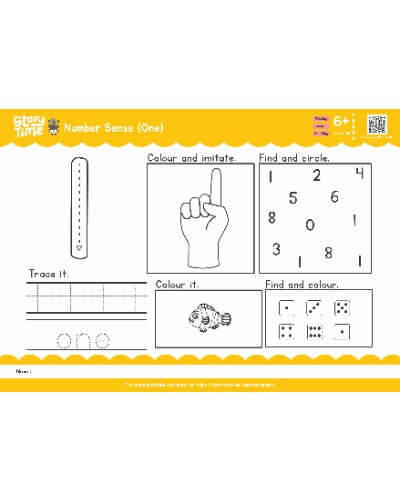
Ages 4-6 · Counting · 1 page
The same friendly format as the number four page, this time focused on the number one: tracing, colouring, finger counting and matching. It's a gentle place to begin if your child is brand new to written numbers. Many parents print both and work through them on different days.
Try this: Start with this one even if your child can count to twenty. Writing numbers is a separate skill from saying them.
Making preschool maths worksheets actually work at home
A worksheet is a prompt for a conversation, not a test. How you sit beside your child matters more than how many boxes get filled in.
- Keep it to 10 minutes. One page, then crayons away. Ending on a high means they'll say yes next time.
- Count out loud together the first time. Then let them try the second row alone.
- Let the fingers do their job. Finger counting isn't cheating, it's a child's first calculator.
- Don't correct straight away. Say "let's count again together" and let them find it themselves.
- Take it off the page. Count kuih on the plate, shoes at the door, cousins at a family gathering. School holidays are perfect for this.
If your child loses interest halfway through, that's information, not failure. Fold the page, save it for the weekend, and count the stairs on the way up to bed instead.
For days when you'd rather not print anything at all, StoryTime has calm, low-stimulation counting activities for ages 3-7 that work the same gentle way. Print, count, colour, praise. That's the whole method, and it works.
Find More Free Worksheets
Looking for more? Browse all our free printable worksheets, sorted by age and topic.